Davidson’s Plum Syrup

This season I decided to take a break from making Davidson’s Plum jam. Unfortunately though, my tree didn’t receive the notification and consequently ripe plums have been raining down for several weeks. I’ve offered them to my neighbours, but no takers so far. And as I can’t stand the thought of them all going to waste, I decided to try making a syrup to use in drinks, trifles, ice-cream, whatever I can think of …
  • 500g fresh or frozen Davidson’s Plums
  • 500g sugar
  • 1 cup water
  • Optional 3-4 pieces of Star Anise or a Vanilla Pod
  • Also optional a teaspoon of Rosewater at the end

Bring plums, sugar and water to the boil in a large saucepan.
Mash the fruit to release their juices and add the Star Anise or Vanilla Pod if using
Keep cooking at a slow boil for about 10 minutes or until it thickens slightly
Strain the mixture through a sieve into a large jug and allow to cool slightly whilst you sterilize a bottle by filling it with boiling water and allowing it to stand for 5-10 minutes.
Pour the water out of the bottle, and use a funnel to pour the juice into your bottle.
Add the Rosewater if using.

  • This recipe makes about 250 ml of syrup and can be multiplied for larger batches
  • As freezing destroys the natural pectin useful in jam making, this is a great way to use up excess plums which you have frozen.
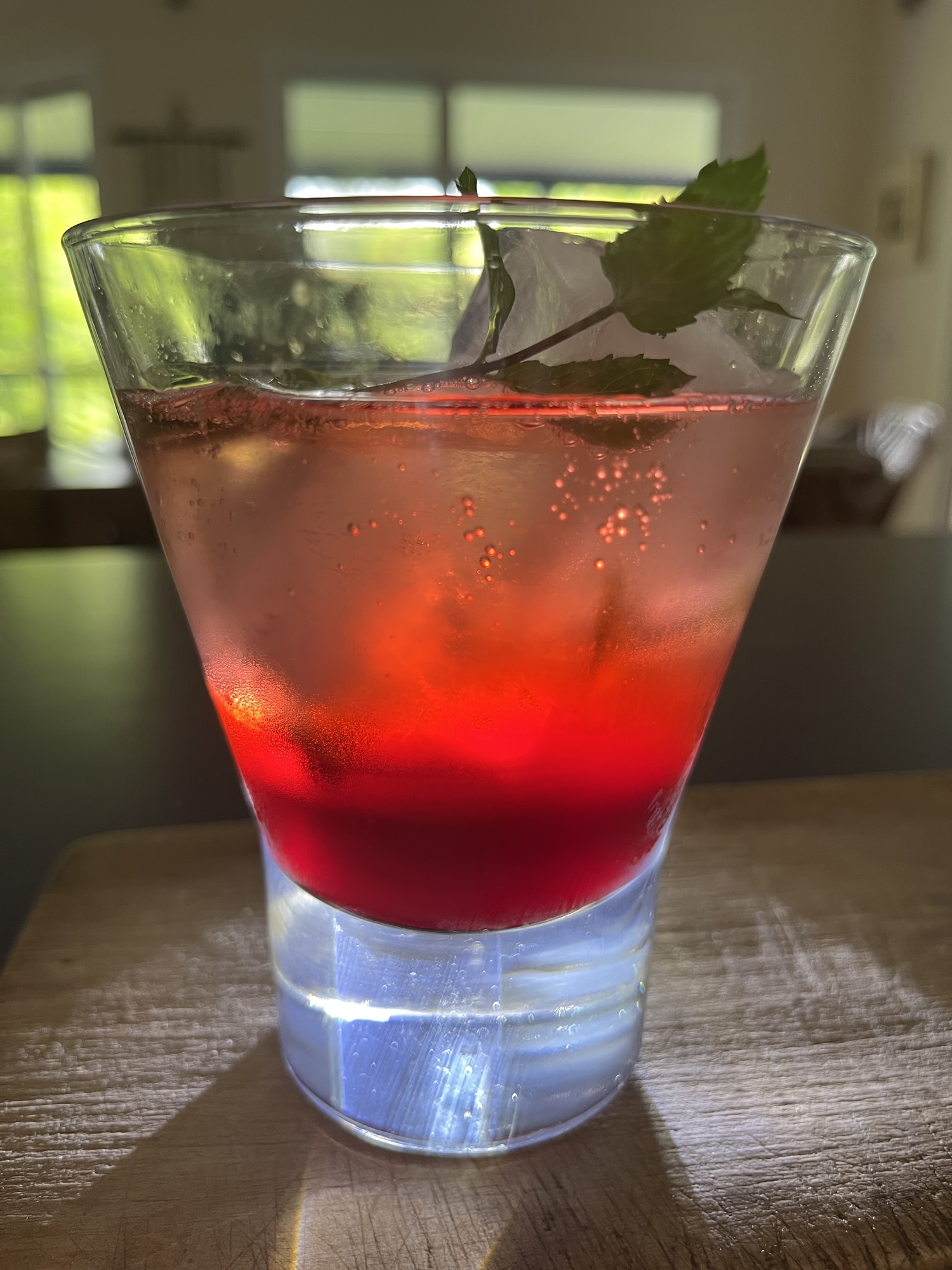
  • Pour the syrup over ice and add soda water for a refreshing alcohol free drink, or add to your Aperativo – I’ve used it in a gin & tonic and in even in a Negroni!
  • It’s delicious poured over a good quality vanilla ice-cream
  • And it’s quite addictive …


Birding from my armchair …

Whilst not technically birding from my armchair, I usually notice birds in the nearby trees in late in the afternoon just after I sit down for a glass of wine. So, I’ve developed a stalking protocol …

I very slowly put down my glass of wine, slide to the floor without moving to the left or right, then crawl on my hands and knees behind the sofa until I reach the veranda door. Where I slowly stand up, again without moving to the left or right and pick up my strategically placed camera.

Using this protocol, I captured these photos of a Kookaburra with his/her prey in the Mango tree. To be fair, I think that he was probably a bit stunned and wondering how the hell he was going to deal with such a large rodent. He eventually flew off, rat in beak, close to the ground like an overloaded cargo plane.

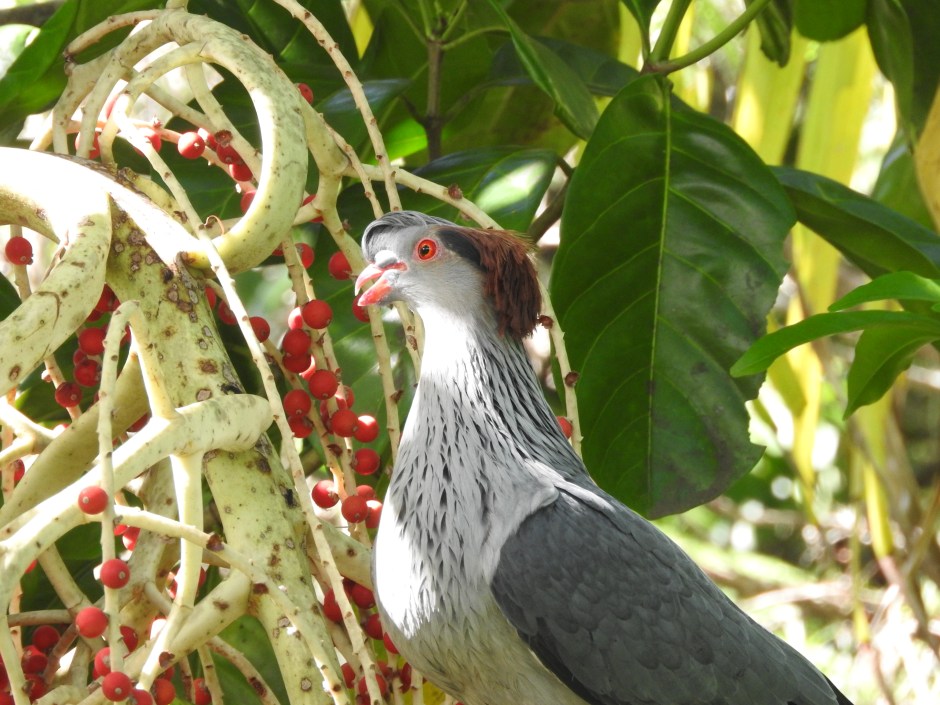
When I planted a Bangalow Palm and a native Tulipwood Tree close to my veranda (probably a bit too close in retrospect) I hadn’t foreseen what an attraction their berries would be to the local birds. A serendipitous, but potentially ill-advised decision, which results in a daily queue of birds chasing a late-afternoon snack.

Being a Bowerbird …

Here’s what you do when your town goes into a soft-lockdown and you have a list of home maintenance jobs that you really don’t want to do. Find an excuse to do something else …

I challenged myself to make a Bower Box using only treasures found in my garden, and not to buy anything specifically for the project, although I admit to one cheat, the wooden jewellery box which I had already purchased for another project. The idea came from a wooden gift box of gourmet goodies sent to me by my neighbours as a thank-you. I just couldn’t bear to throw it away. The blue paint came from a left over can in the garage and the lichen came from trees in the garden.

Inspiration came from one of my favourite books, Sibella Court’s “Bowerbird”.
(bowerbird –noun informalmainly Australian a person who collects miscellaneous objects – that’s me!)

I’ve never understood why it’s so hard to find a dead cicada on the ground when thousands of them hatch each year.  Surely they can’t all be eaten by birds? Anyway, after much scratching around over several cicada seasons, I’ve managed to find and identify five species.  Maybe this year will bring me a Greengrocer to complete the collection.  I’m almost looking forward to Cicada Season.  Maybe not?

The pigeon skull came from a brown cuckoo-dove which flew into a window and was thankfully killed instantly.  The rat perished after becoming stuck in a wall cavity.  Both were buried in my compost bin, where the worms and bugs went to work.  They didn’t quite finish the job, so I had to complete the gruesome task.

I wanted to include two nests in my display. One of the nests fell out of a tree on a windy day, the other is a fake.  Can you tell which one?

We will be under lockdown for another week, so I’m looking for another excuse NOT to clean my windows.

Burnt Citrus Syrup recipe …

Burnt Citrus Syrup Recipe
(this is a delayed gratification recipe!)

It’s citrus time again.  When friends and neighbours chase you down the street almost begging you to take their home grown lemons, limes, oranges, or kumquats.  The trouble is of course, that EVERYBODY has citrus at the same time!

So here’s something you can do with all that citrus …

You will need

  • a selection of sweet and sour citrus – orange, mandarin, kumquat, grapefruit, blood orange, lime etc – this is a great way to use up ugly, misshapen or blemished citrus.  The more variety the better, but not too much sweet fruit.
  • a selection of herbs and spices, for example – coriander seeds, rosemary, cinnamon sticks, black peppercorns, cloves (not too many), star anise (ditto).  Pick three or four of your favourites.
  • one or two large wide mouthed jars (eg Fowlers or Mason preserving jars)
  • optional – 1 tsp of Citric Acid for each jar – to help preserve the fruit
  • 1-2 litres of sugar syrup – see below
  • a selection of attractive glass bottles for the final product

Step 1 -Burn your Citrus 

  • wash the fruit, chop it into chunks and pile it on to some baking paper in a large roasting pan.  Sprinkle over the herbs and spices.
  • Slow roast it in the oven at 130C (260F) for four to five hours. It will look a bit like a baking disaster but never fear, it’s all good.

Step 2 – Preserve your citrus

While the citrus is in the oven get your sugar syrup ready and sterilise your jars – this can be left until the last 30 minutes of cooking time.

  • Sterilise your preserving jars with boiling water. Be scrupulous.
  • Make enough sugar syrup to fill the jars and cover the burnt citrus. There are plenty of recipes for sugar syrup on the internet. I used two parts sugar to one part water dissolved over low heat. If you use a strong sugar syrup, you can always add a little boiling water to the jar if you run a bit short of sugar syrup.  Warm the syrup when you are ready to fill the jars.

Step 3 – Bottle and wait …

  • Split the citrus pieces, spices and herbs roughly evenly into the sterilised jars.  Fill the jars to around two thirds.
  • If using, add  ½ tsp each of Citric Acid for each jar to help preserve the fruit.
  • Fill the jars with warm sugar syrup and seal.
  • Wait for at least one month. This is the hardest part.
  • Remove the citrus pieces (I throw them on my compost heap) and pour the syrup (which will have turned orange) through a strainer into a jug.  Then into sterilised glass bottles.

Note: this makes a very sweet, unctuous syrup which can be diluted. Prolong the life of the syrup by storing it in the fridge.  If you are scrupulous with sterilising, the syrup will last for several years – I am still using my 2018 vintage!

Uses: pour on ice-cream, make mocktails, or dilute with soda or tonic water.