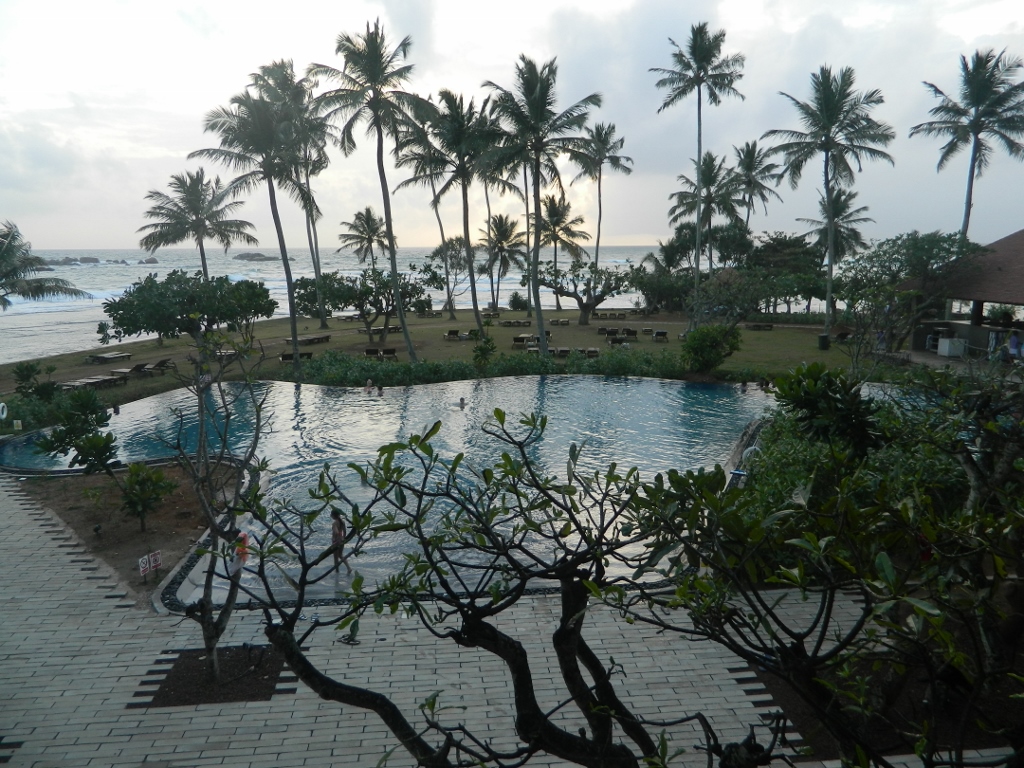
We’ve been “on the road” for three days now, travelling down the west coast of Sri Lanka, threading our way through cows, goats, dogs, tuk-tuks, cars and pedestrians. It’s slow going, we gasp and drivers toot as their loaded buses pass each other with millimetres to spare between their mirrors.
We experienced a wild night at the beach resort of Hikkaduwa as the south western monsoon moved in from the sea, blowing tiles off the hotel roof, damaging houses and uprooting trees. Sadly, the region’s fishing fleet was badly hit, there have been 8 deaths, 17 fishermen are missing and 36 boats are still lost at sea.
Still, apart from a few heavy showers, the monsoon hasn’t yet affected our plans …We’ve lunched by the beach at Mirissa, visited Kosgoda Turtle Hatchery, a Moonstone mine and the gardens of Geoffrey and Bevis Bawa. Now it’s on to Yala National Park …
Depending upon which map you consult, Bellingen is either just inside, or outside the sub-tropical gardening zone. Either way, I knew that trying to establish a sub-tropical garden this far south was always going to be a bit optimistic. The problem is that I am drawn to the lushness of tropical foliage. Perhaps this is due to spending my formative years living in the outback desert town of Woomera ?
Unfortunately, it wasn’t an ideal summer to start the sub-tropical part of my garden … three months of spring drought, followed by a month of hot weather, then a severe wind-storm, a flood, then weeks of daily rain and no sun. Our rainfall total for the first three months of the year was 1084mm!
Rubbish Skip Bromeliad
Many plants have been un-affected by the weather, others have sulked and refused to perform. The Ylang Ylang, which finished winter looking like a dead black stick, burst into life again, but other even more optimistic plantings just well … croaked !! The beautiful Barbeletta bamboo I purchased for $150.00 is stone-cold dead, whilst the bromeliads I rescued from a friend’s rubbish skip are looking fabulous and producing pups and flowers. Is this a lesson? The more expensive the plant, the more likely it is to die?
Thai Beauty ginger
Some of the best performers this summer have been the gingers … the bees love them, they have flowered enthusiastically and their perfume has turned mowing from a chore into an aromatherapy session. The Thai Beauty which died down over winter, produced beautiful fragile blooms, but the torch gingers that I planted after falling in love with them in the Singapore Botanic Gardens, must have known they were doomed and didn’t even bother to raise themselves out of the ground.
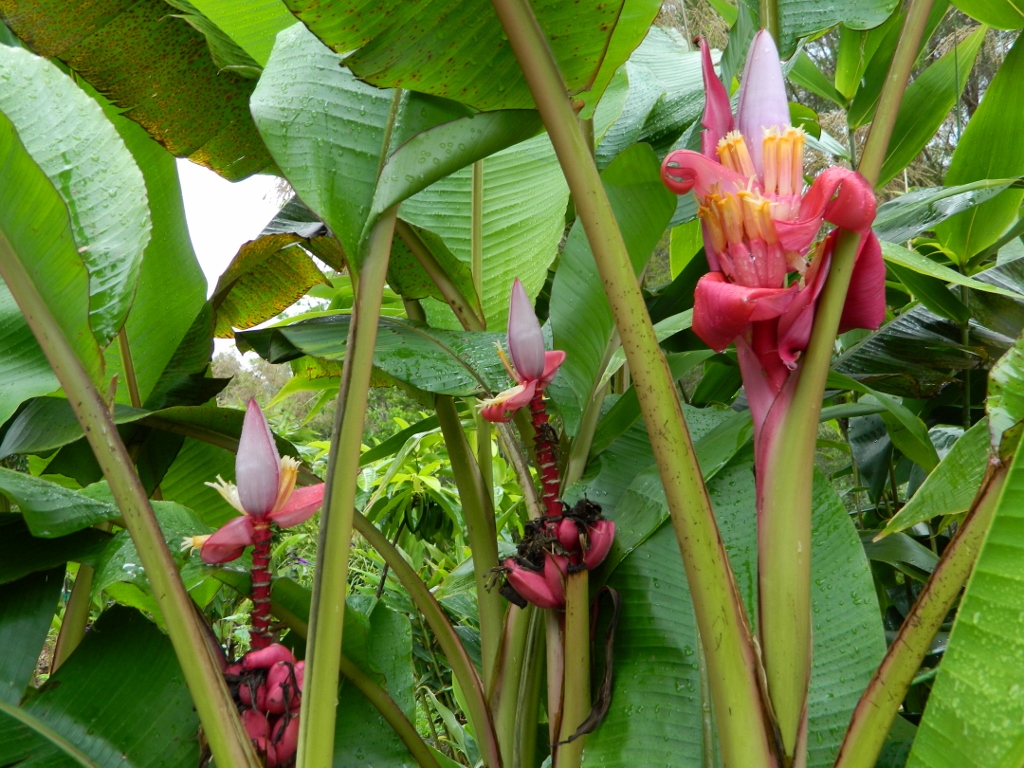
Musa Velutina
As always, the bananas can be relied upon to go absolutely bananas !! The pink Musa velutina have flowered their heads off, and provided snacks for the honeyeaters, and the not-so-dwarf Cavendish provided me with a huge bunch of small sweet bananas. The Abyssinian has finally settled in and is producing spectacular leaves. ( I have five Abyssinian seedlings ready to go in the ground, and I suspect that these will be next summer’s stars.)
So now that summer is over, I should be having a sensible talk with myself … but next month I am indulging in some more masochism. Three weeks in monsoonal and truly tropical Sri Lanka and the opportunity to drool over plants that I couldn’t possibly hope to grow in my garden. Or could I …. ???
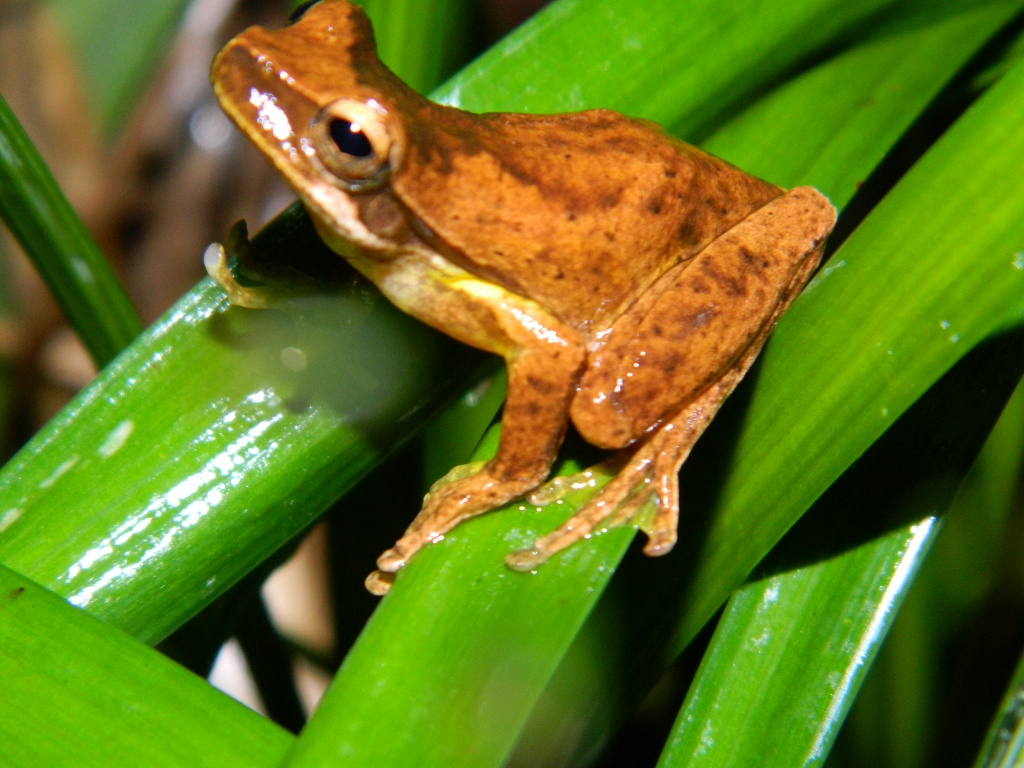
A few nights ago, as I was lying in bed lulled by the sounds of the night and the rain gently dripping from the trees, I became aware of a new sound coming from the direction of the frog pond. I wasn’t really expecting to hear another new frog this late in the season, and the thought of leaving my bed and mounting a pond expedition was not exactly appealing … but it did sound almost frog-like, so from the comfort of my bed, I consulted the Frog App on my iPhone, and there it was, right at the end of the list …. a Whirring Tree Frog!!
Blast, now a nocturnal expedition was unavoidable !!
Getting a photo of this frog proved to be quite difficult since my pond is now so overgrown and frog-friendly that it’s not really human-friendly any more. Add to this a recent sighting of a very pretty yellow and blue tree-snake, and the idea of wading to the other side of the pond in the dark with a torch and a camera was a bit daunting. But finally, on the third night, a co-operative frog positioned himself in an accessible spot and I was able to take a photo. Unfortunately this frog is really shy and went quiet every time I tried to sneak up to take a video. This is the best I can do – a view of one of my ponds, with Whirring Tree Frogscalling nearby, and a very quiet Whirring Tree Frog in the rain. Turn up your sound to get the full effect, and that’s frog species number eight in case you’ve lost count !!
Our last two days passed in a bit of a blur … and we’ve decided that Kangaroo Island is a microcosm of Australia. Salt pans, dry creek beds, bush fires, bone-jarring dirt roads, lagoons, beautiful deserted beaches, and a home to over 1,000 native plant and bird species. The island feels remote, but in contrast you are never too far from a vineyard, a cheese maker or a meal of fresh fish.
Wildlife highlights – Tammar wallabies on our front lawn, a dolphin skimming through the shallows only metres from our feet, and our visit to Duck Lagoon which even at the end of a dry summer has enough water to sustain a large number of birds.
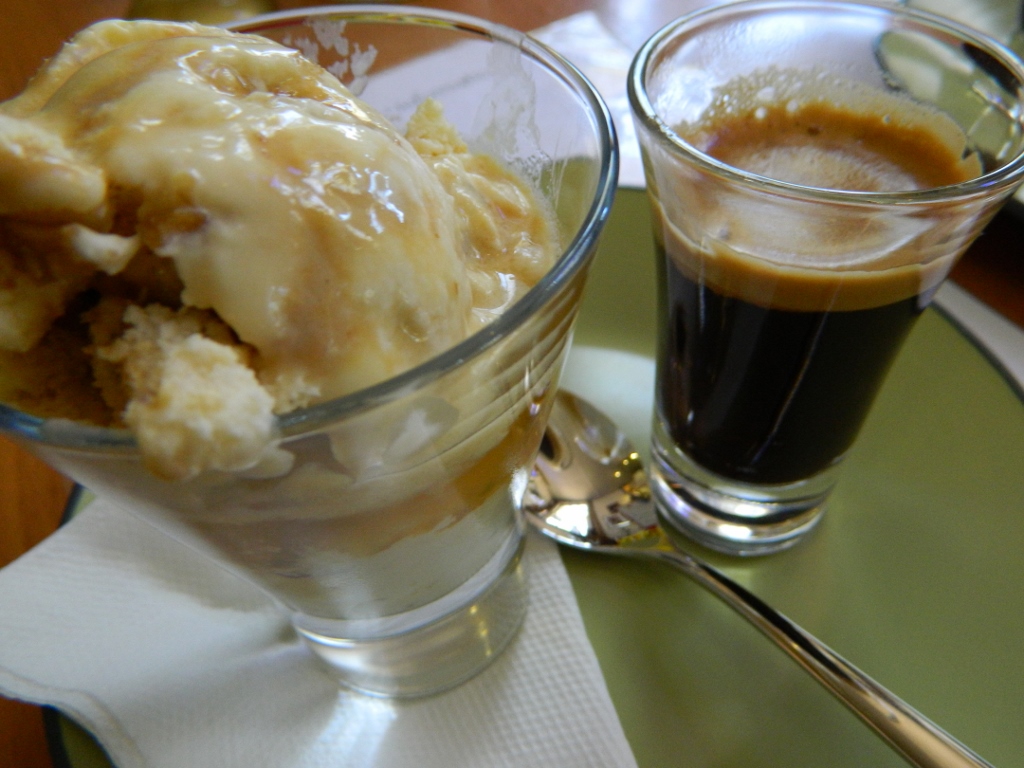
The food highlight was at Kangaroo Island Spirits, a rustic and quirky little distillery located in a corrugated iron shed near Cygnet River. They make an affogato to die for – drunken honeycomb ice cream, honey and walnut liqueur and a shot of espresso. Absolutely worth a detour if it’s not already on your itinerary.
Five days on KI was not nearly long enough and we have decided to go back in October for wildflower season and to explore the western end of the island.








 A Bellingen Diary