Inside the Bat Cave …

It took me a while, but I finally found a suitable spot for the Bat Cave after I confirmed that the Tawny Frogmouths sitting in the banana tree just metres away, DON’T eat microbats.

DSCN7200 (1280x960)

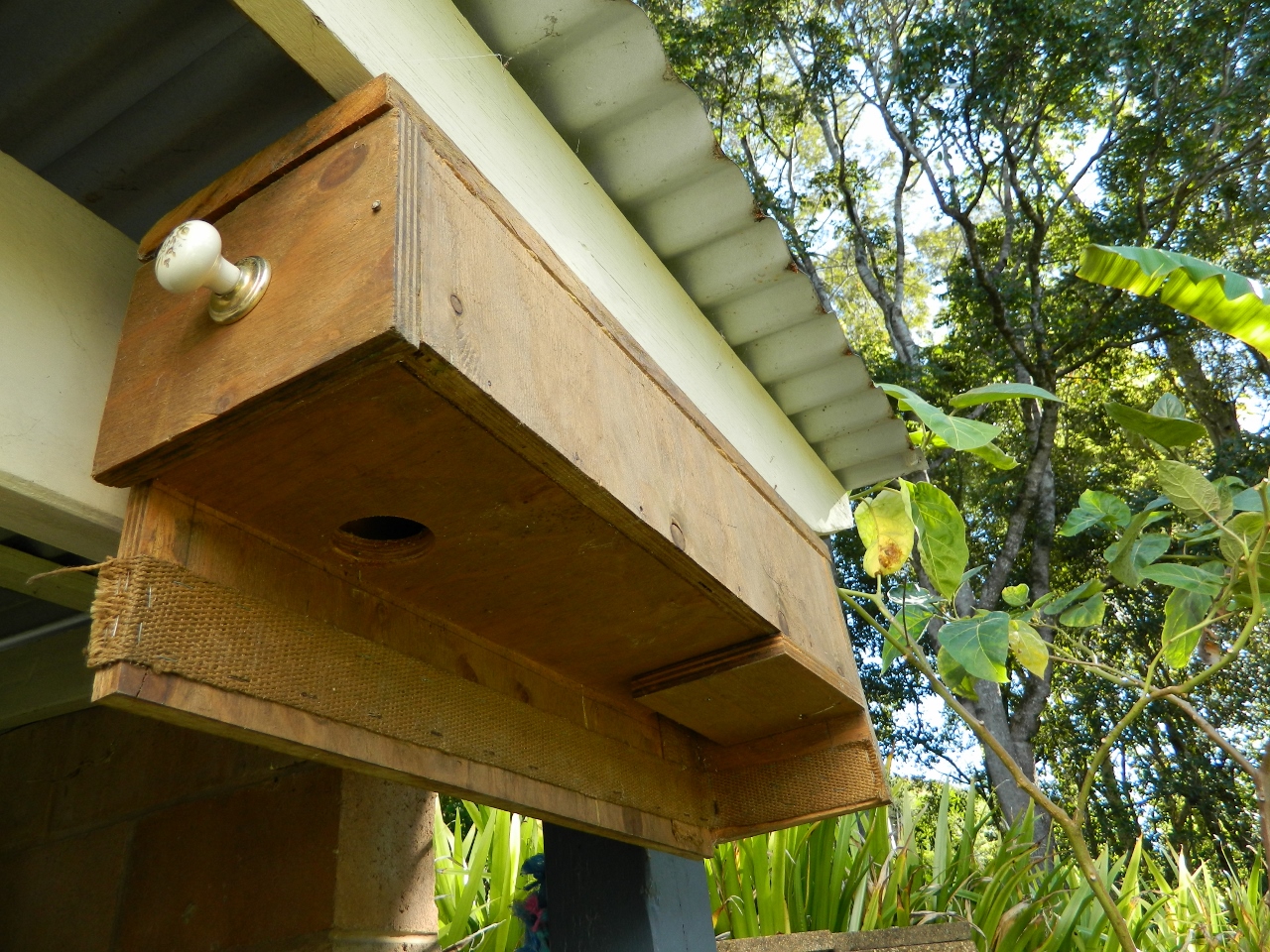
The cave has a landing strip, an emergency exit, hanging rails with room for two rows of bats and a removable hatch with a porcelain handle in case I can’t resist having a “sticky beak”.  If there was a bat version of Trip Advisor, this cave would get 5 Stars !!

It isn’t the most beautiful object in my garden (sorry Jack ) and I’m sure the bats won’t give a hoot (we won’t mention Owls) but I’m sorely tempted to do some decorating …

DSCN7215 (1280x960)
INSIDE THE BAT CAVE

Microbat update …

Within hours of posting yesterday I had the offer of a roosting box from a local couple who live in the bush just outside town.  Jack and Helen are so fond of microbats that they build and hang roosting boxes in the eaves of their house.  In the warmer months, they leave their doors and windows open, allowing the bats to race through their house in pursuit of insects.

RSCN7182
A very bad photo of the Southern Boobook

But, there’s been a development…  This morning when I went out for my early morning walk, I disturbed an owl.  It was sitting on a chair right beside the garden umbrella, and when I looked up into the umbrella … no bats !

Local ornithologist Richard has confirmed that it’s a Southern Boobook and added the comment “bats actually fly quite slowly, so they are a good prey item for owls”  I’m a bit distraught!


Jack and Helen did tell me that the microbats move around quite a bit, and that it’s doubtful they would have spent the winter in a flimsy umbrella, so I’ll find a spot for the roosting box and hope that the owl loses interest and that the bats return.

A micro problem …

Here’s one of my many wise sayings …

“It’s always a good idea to investigate unusual poo”

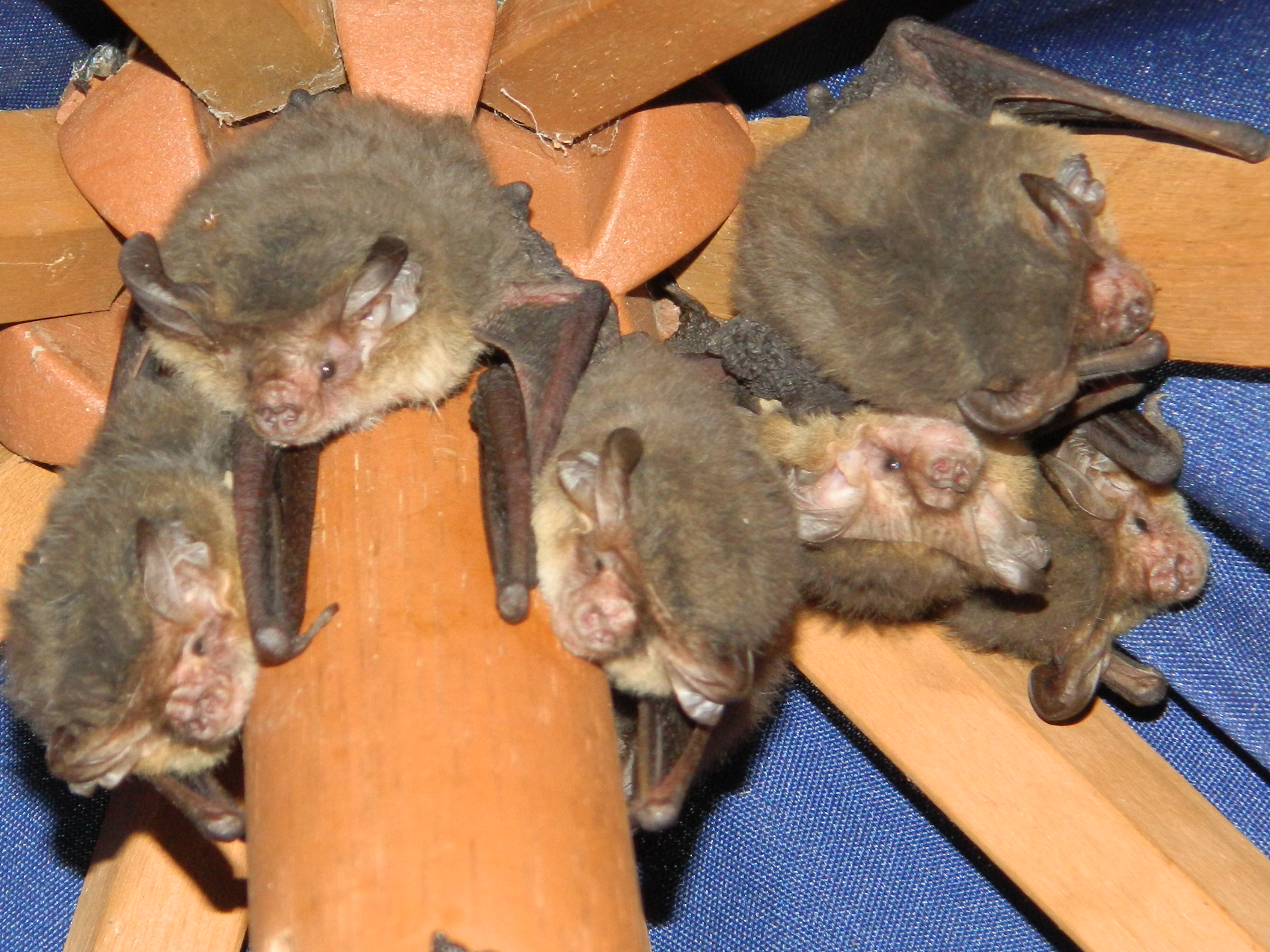
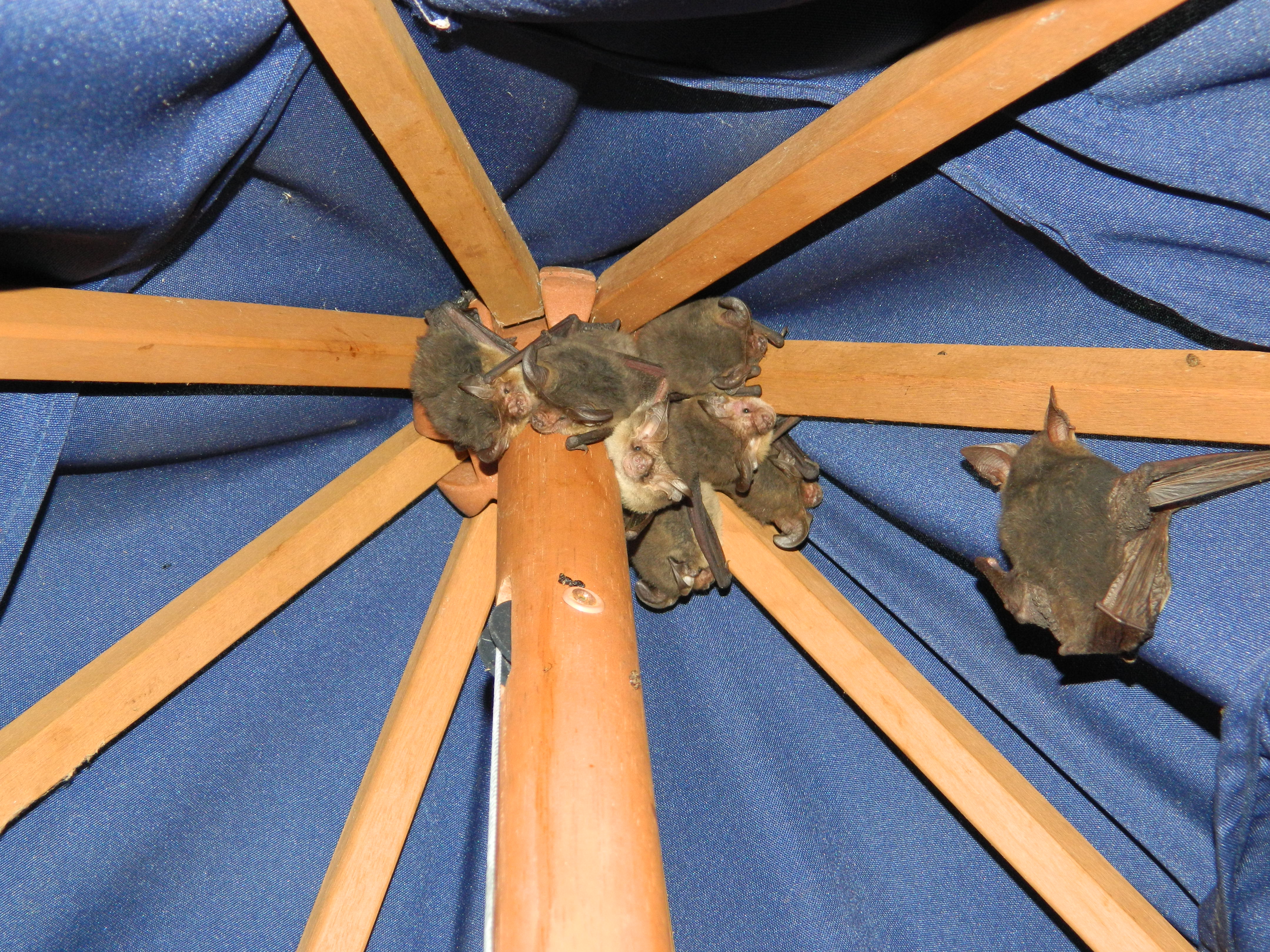
You want to be sure that you don’t mind sharing your house or garden with whatever expelled it.  So when I noticed some new poo at the base of my garden umbrella, I did just that.  I very carefully wound the umbrella open a few turns and stuck my head slowly up inside the folds.  There to my surprise I discovered a family of microbats.

RSCN7174
Possibly a Gould’s Long Eared Bat ?

I’ve heard of microbats and I know they live in the Bellinger Valley but I’ve never seen one before.  They are about the size of a large mouse, they have the most fearsome little faces (and teeth!), and they were not at all happy with me trying to take their photo.

Now this discovery poses a bit of a problem – microbats are classified as vulnerable due to loss of habitat and feeding grounds.  If they have decided that my blue umbrella is their new roosting spot, does this mean I have to buy another garden umbrella ??

DSCN7159

What to do with a Finger Lime ?

When I saw these at bellopy our local organic market I just had to buy them. Known as “citrus caviar”,  finger limes  are a native rainforest fruit with a similar taste to that of lime.  Inside are beautiful little pearls instead of pulp.  But once bought, what to do with them ?

DSCN6841 (1280x960)

Well obviously … my first thought was can use them in a cocktail ?  So I made up a lemongrass syrup, placed a teaspoon of finger lime pearls in each compartment of an ice-cube tray, filled the tray with the syrup, and froze it.
Voilà … you have a sort of finger lime bomb to put in your glass of bubbly or white wine.  As the ice-block melts, the pearls float gently to the surface.

DSCN6896 (960x1280)

Of course they would be a wonderful tangy garnish for fish, and I stirred some into lemon butter for something really different.

Finger Lime Cocktail Bombs

Make a simple sugar syrup using one part sugar to one part water, say …

250 ml sugar
250 ml water
2 stalks of lemongrass stripped of their outer layer and cut into 5 cm pieces
(If you don’t have lemongrass, you can use the zest of a lime)

In a high-sided saucepan over medium-high heat, bring cold water and sugar to a boil. Turn the heat to low, add the lemongrass pieces and stir constantly until the sugar dissolves completely and the mixture is clear, approximately 3 to 5 minutes.

After boiling, let the syrup cool to room temperature, remove the lemongrass pieces and then pour into a clean glass jar and store in the refrigerator. The syrup can be refrigerated for up to 6 months.

Cut the finger limes into quarters crossways not lengthwise, and squeeze the pearls gently out into a bowl.  Then place a teaspoon of the pearls into each compartment of an ice-block tray.  Fill each compartment with cooled sugar syrup and freeze.  When frozen, store the ice-blocks in a sealed container in the freezer ready for use.