Chasing teddy bears …

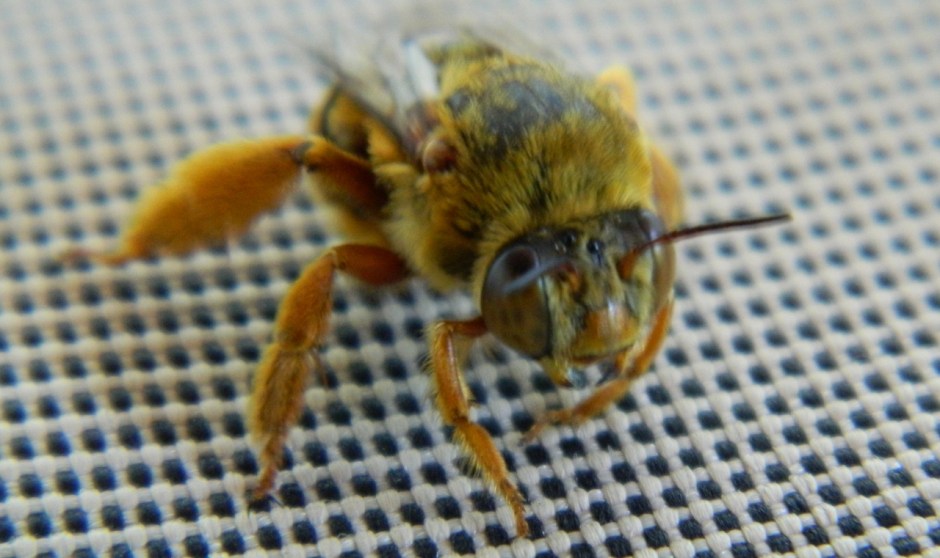
I’ve been chasing a Teddy Bear Bee around the garden for weeks.  It is probably the most manic bee so far, in that it seems to spend all its time hovering and darting around the rock wall near my garage and no time collecting pollen.  Of course this can’t be true, but I’ve yet to catch it on a flower.  The result of my efforts is a collection of fuzzy bee photos … can you spot the bee in this photo?

In desperation I resorted to chasing after it with a big white plastic jar – luckily out of sight of my neighbours who would surely have thought I had lost my remaining marbles !!

So here it is, my one and only and still not quite in focus, photo of a Teddy Bear Bee. You can see the bald spot on the top of its thorax indicating that it is an “older” bee.  It’s a solitary native bee which nests in a burrow, or sometimes under houses, which could explain why I see it hanging around the garage rather than the garden.
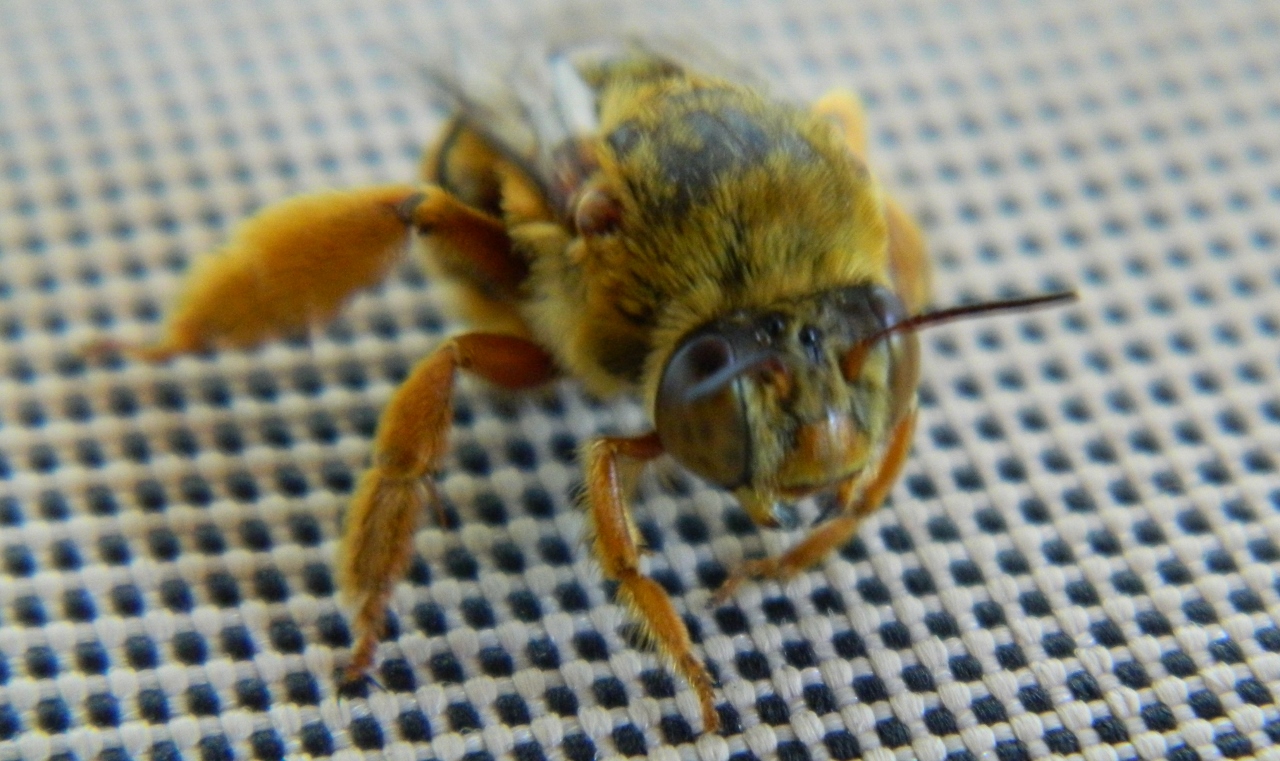
Footnote for Manuel who thinks that strange and wonderful creatures lurk outside my door just waiting to be discovered …  I have been trying to confirm a sighting of a  Domino Cuckoo Bee for over two months.  Watch this space!

A boxful of bees …

The residents of central Queensland have no reason to thank tropical cyclone Marcia, but for me there was an unexpected bonus.  Being on the southernmost edge of the cyclone, northern NSW was subjected to five days of almost incessant heavy drizzle.  With the skies overcast and temperatures slightly lower, it was finally the perfect time to ship my hive of Native Stingless Bees.

I awoke several times during the night worrying that my “entombed warriors” might have overheated on the trip down from Brisbane. I couldn’t bear to wait for the courier, so I rushed into Coffs Harbour first thing this morning to collect them.

Being a tiny bee, their hive is quite small, this one consisting of two layers with two separate entrances, and a flyover roof which can be raised for the addition of a small honey pot (more on that later).

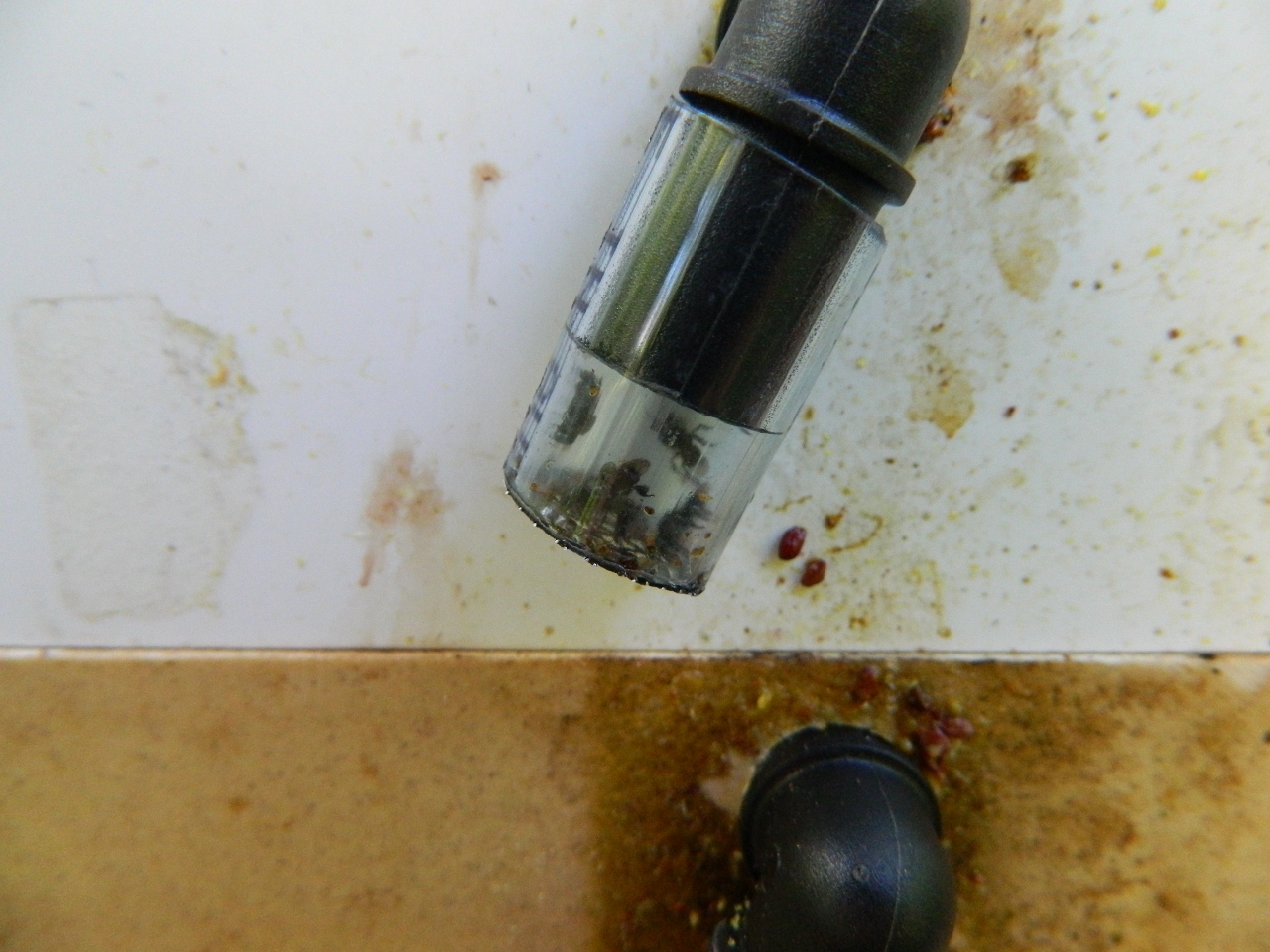
Over the entrances, the breeder placed a piece of clear plastic tubing with very fine mesh glued to the end to allow air circulation – a clever idea!  In the next photo, you can see the bees trying to get out.

The minute I removed the plastic tubes, out they came as you can see from this video.


With the hive placed on the stand I constructed months ago, I’ll be able to watch their comings and goings.  And I’ll have to be a lot more careful about absent-mindedly swatting little black insects buzzing around my face from now on!

Blue Banded bees …

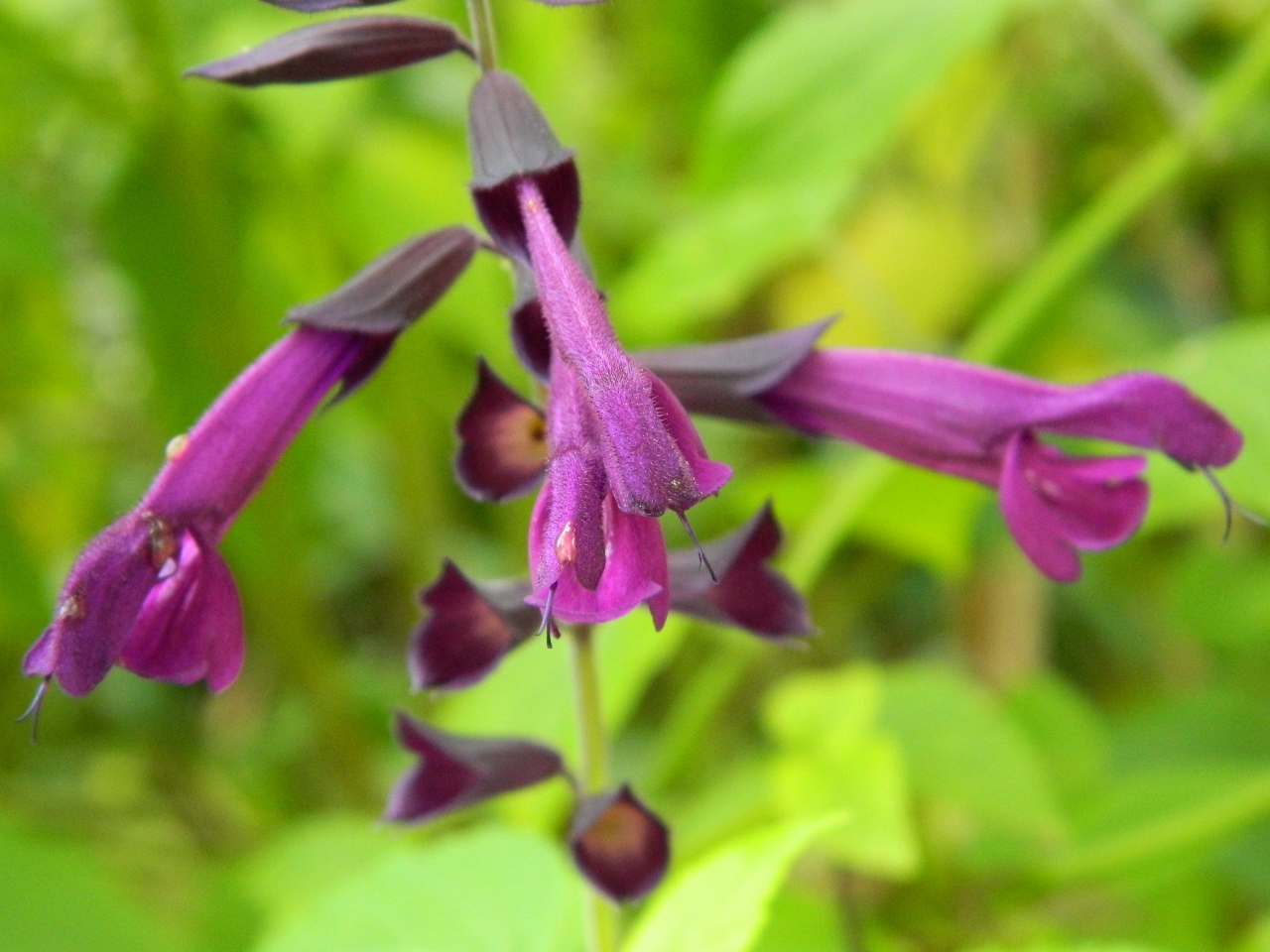
I should have read the label more carefully when I bought this beautiful Black Knight salvia. But I didn’t and consequently planted it in the wrong spot.  I read that it flowers for most of the year, but I missed the bit where it said – grows to three metres!

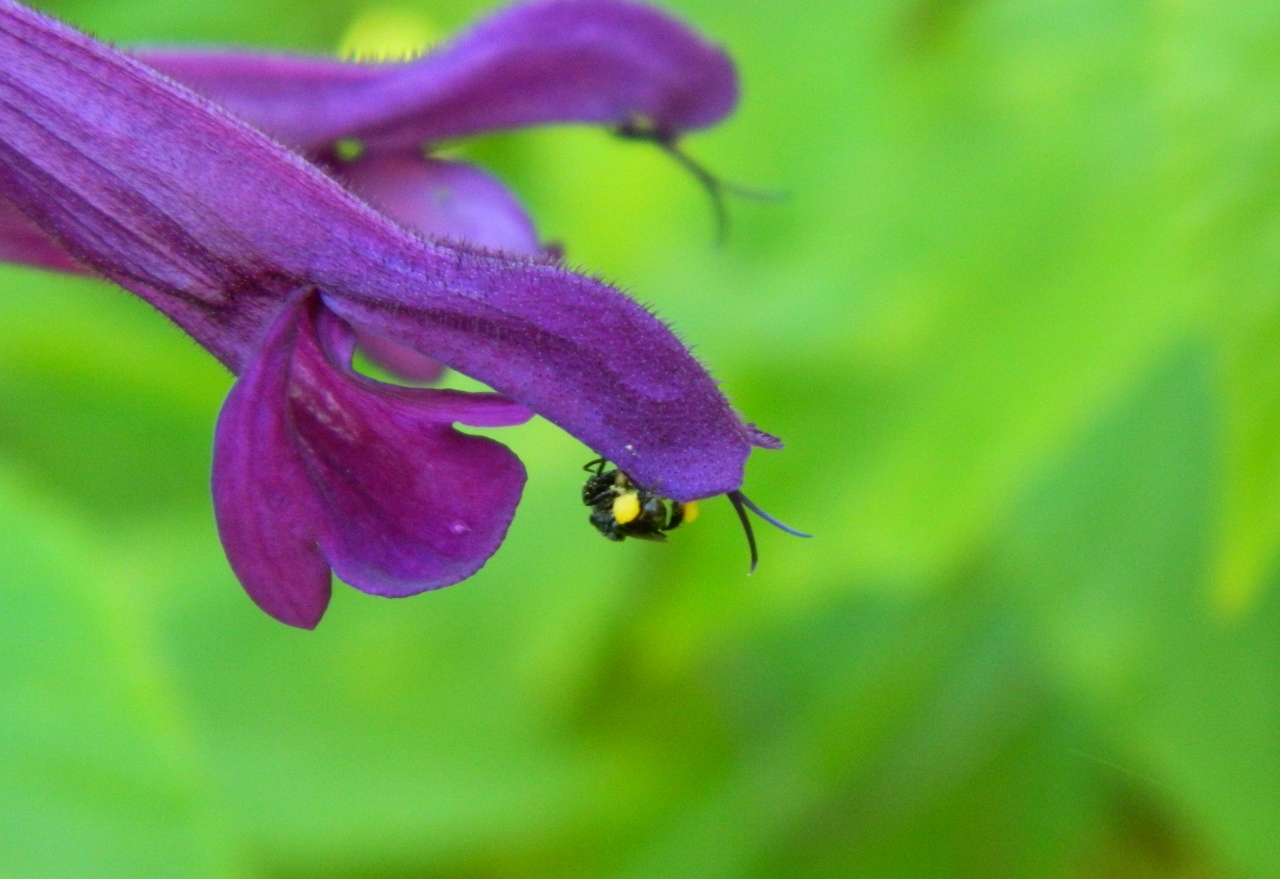
I’m going to propagate from it and plant the offspring in a more suitable spot, but in the meantime I put up with it blocking part of a path because it’s a bee magnet. Almost any time of the day I see native stingless bees buzzing around.

Native stingless with pollen
Native stingless with leg sacks full of pollen

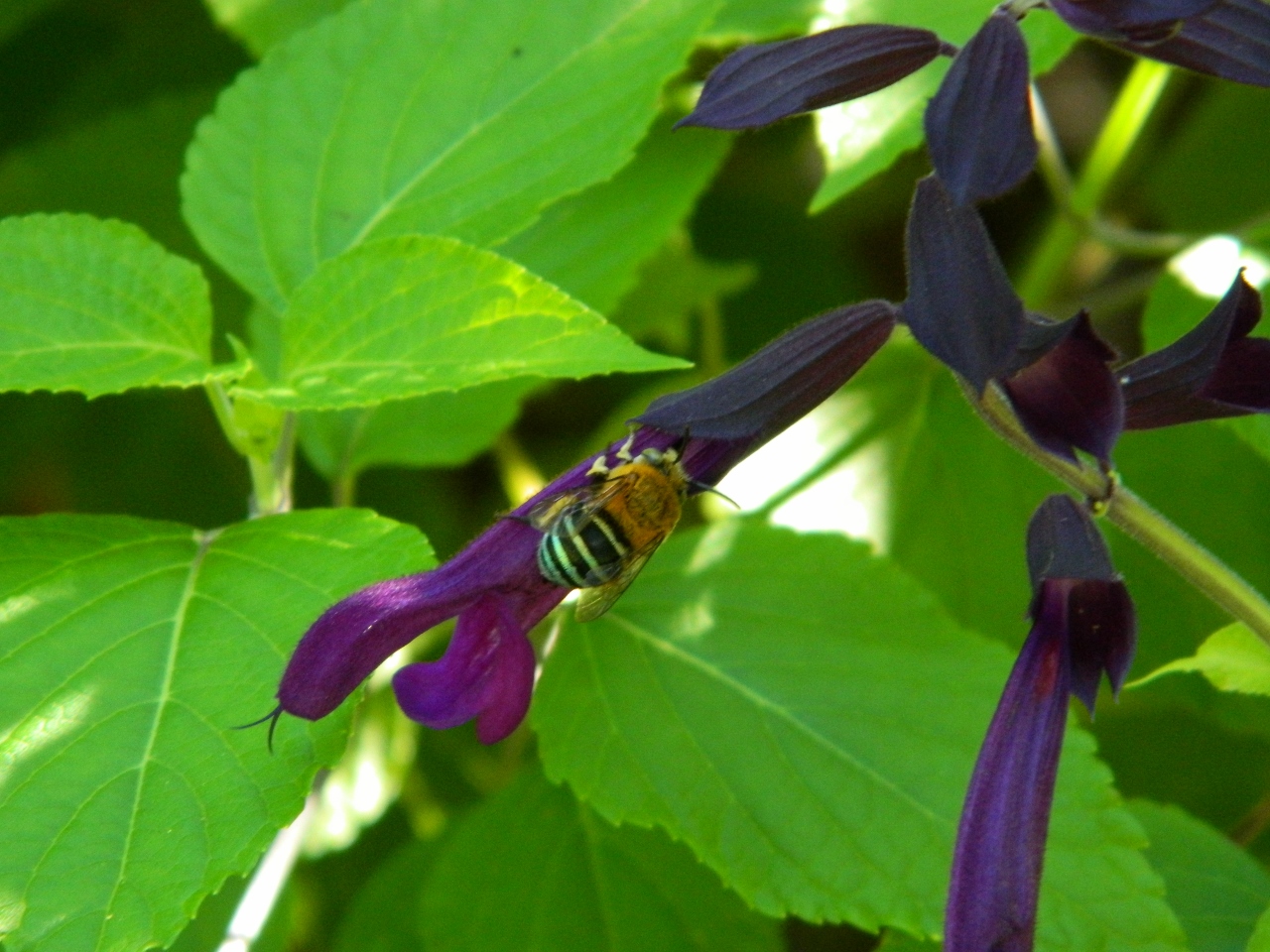
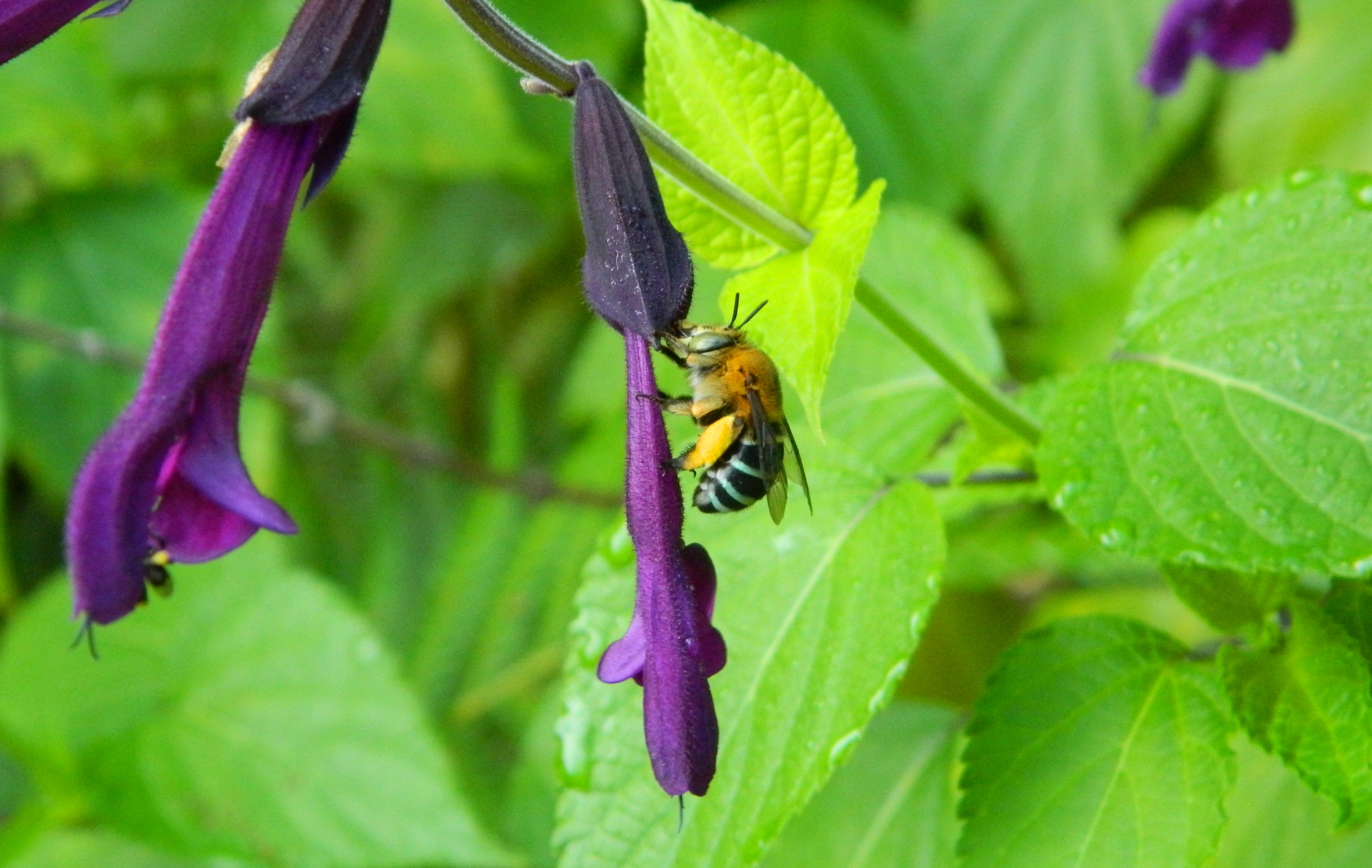
And only recently, I realized that what I thought were large flies scooting around the garden, are actually native Blue Banded bees.  They are an absolute B…… to photograph because they hover and dart like a manic helicopter.

Blue Banded bee
Blue Banded bee

Blue Banded bees are buzz pollinators and they carry the pollen on their backs. If you are growing tomatoes, eggplants, kiwi fruit, chillies or blueberries the Blue Banded is the bee for you because apparently buzz pollination is the most efficient way to pollinate.


The Bee Motel …

I’m waiting (somewhat impatiently) for my native stingless beehive to arrive from Queensland – we need a week of cool weather so we can safely pop them in a truck and send them down.  In the meantime, I’m on the lookout for other bee species in the garden.

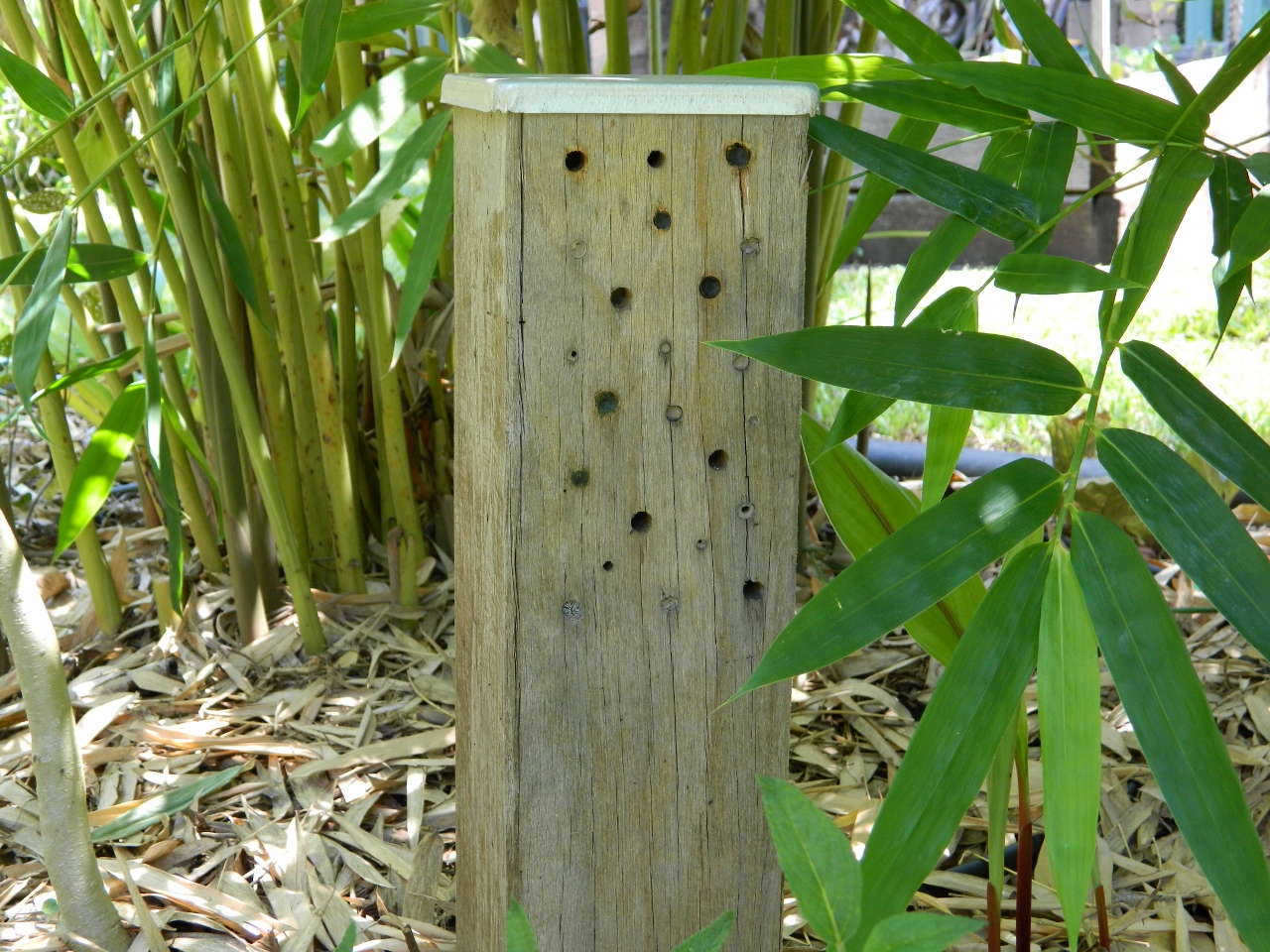
It’s been a few weeks since I checked The Bee Motel, which I made with renovating rubbish about a year ago.  The smaller holes were occupied quite quickly, I suspect by wasps, but the larger ones remained vacant.

DSCN8733 (1280x960)

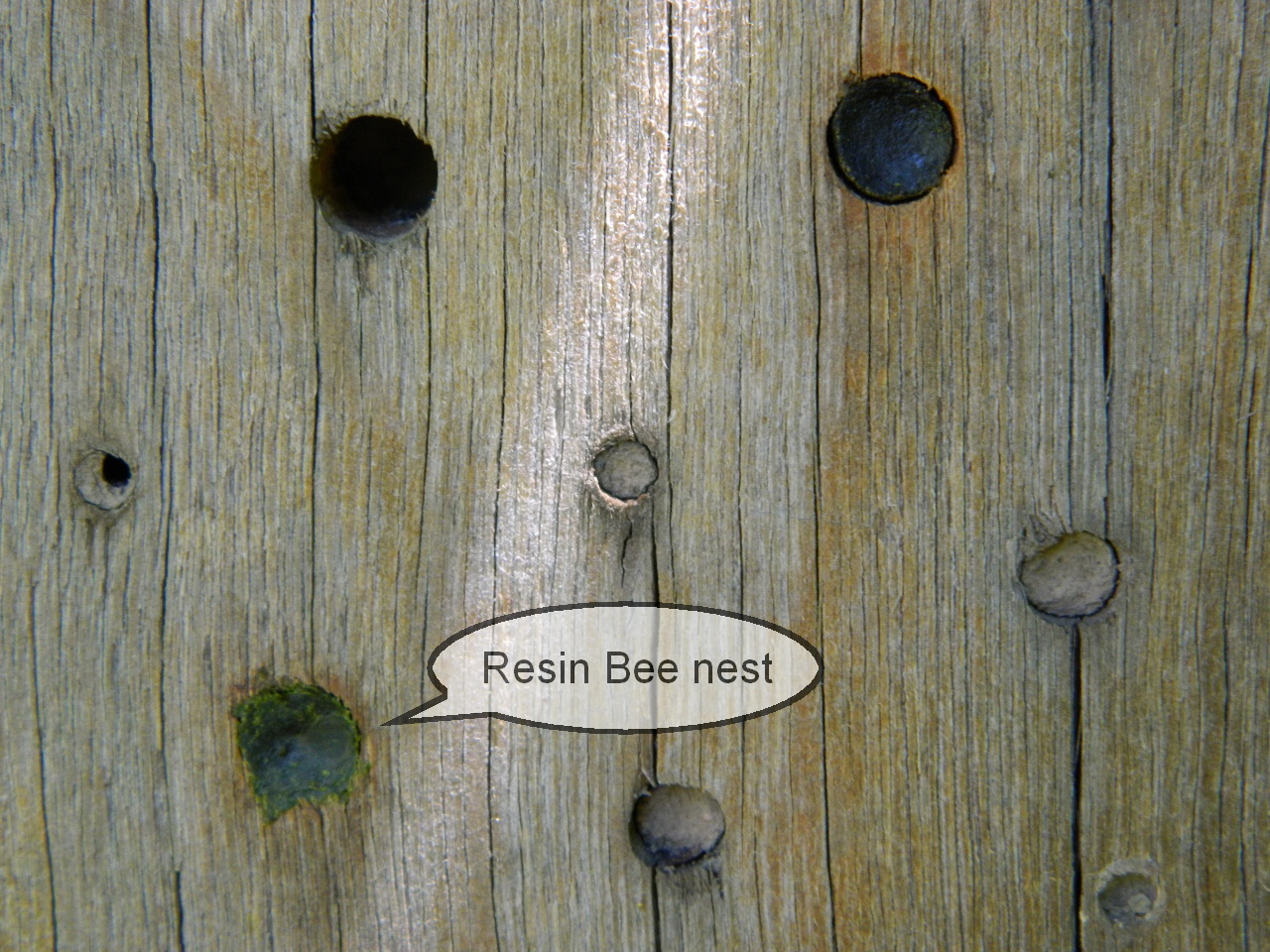
That is, until now. This time I noticed some freshly capped holes …

Resin Bee nest)

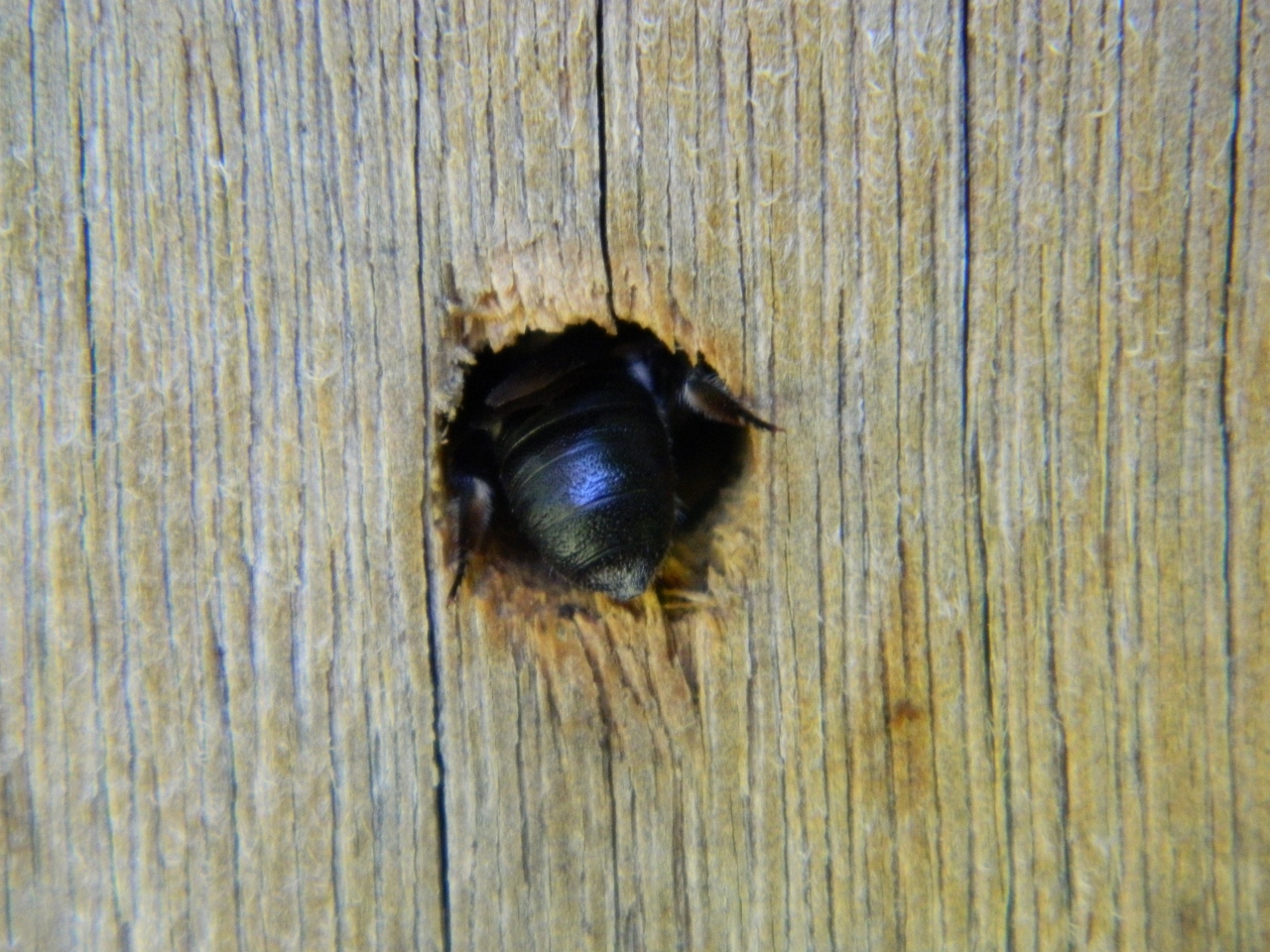
Then I spotted what I have tentatively identified as several native Megachile Resin Bees coming and going, sealing off the chambers with mouthfuls of chewed up leaves. One bee appeared to be trying to drag a competitor from an adjoining hole, but she dug her heels in, (do bees have heels?) and refused to budge.

DSCN8726 (1280x960)

Now I’m trying to find out what species of Megachile they are, and when I can expect them to emerge so I can be there for the birth.  OMG the things I do !!

Resolute Resin Bee

Interesting bee fact: a bee of the same genus, the Megachile pluto, is believed to be the largest bee in the world at 39mm in length.  Read the interesting story of its discovery on the Aussie Bee site.