Naturally beautiful dyeing …

I’ve just spent a week at Bellingen’s annual Camp Creative, and I think I might be developing a new obsession – dyeing natural fabrics with plant pigments.

For five days, the ever patient Anne Leon guided us as we experimented with leaves, seeds, flowers, twigs and vegetables which we placed between layers of natural fabric and then wrapped around pvc pipe, folded, clamped or tied and dropped into simmering pots of lemon myrtle, eucalyptus, red cabbage and brown or red onion.
With mordant (setting agent) added, the magic started …

Checking the pots for unexpected results!

During the week we all learnt a new mantra:

“there are no mistakes, just unexpected results”

Here is a selection of unexpected results which I am happy to show off.

IMG_3790 (1280x960)
Gum leaves & Lemon myrtle flowers on cotton

Perhaps the weeds in my ever increasing collection could be put to
a creative use instead of just being composted ?
Lounging with Lace Monitors …

From time to time I hear loud rustling noises in the garden.  So far, the source has always turned out to be a Blue Tongued lizard, a Carpet Python or a Lace Monitor – but as their tails resemble that of several venomous snakes, I always freeze and wait until I am absolutely sure!

Several years ago, a large Lace Monitor posed obligingly for me in a tree …

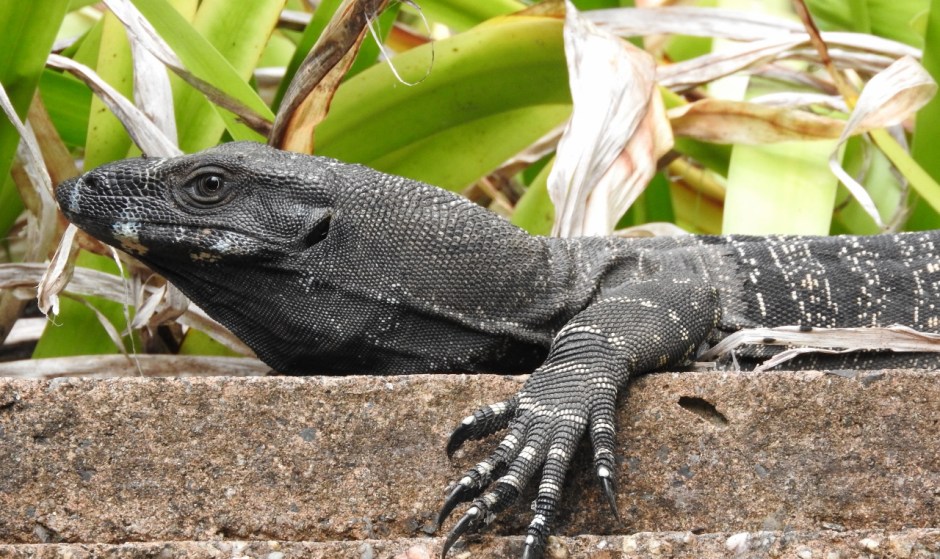
From then on, I assumed that I was seeing the same monitor, but today I realised that this was not the case.  When I was sitting in the garden this morning, I realised that something was watching me … and there lounging in the sun nearby was a much smaller monitor with quite different markings.

There are, it seems, two distinctively marked variations of the east coast Lace Monitor, and when I compare my photographs from 2012, 2014 and 2016, I realise that in size and markings, they are all different.

This may explain some of the loud rustlings I hear at night, and now I wonder just how many Lace Monitors are out there ??

Spot the baby Tawny Frogmouth …

Fellow Sri Lanka traveller Esther has pointed out that the photo of the Tawny Frogmouth couple in my last post actually includes three Tawny Frogmouths.

I didn’t notice, and I took the photo!

It’s snuggled up to one of its parents on the left, and much clearer in this photo. Great camouflage and well spotted, thanks Esther.

It’s no larking matter …

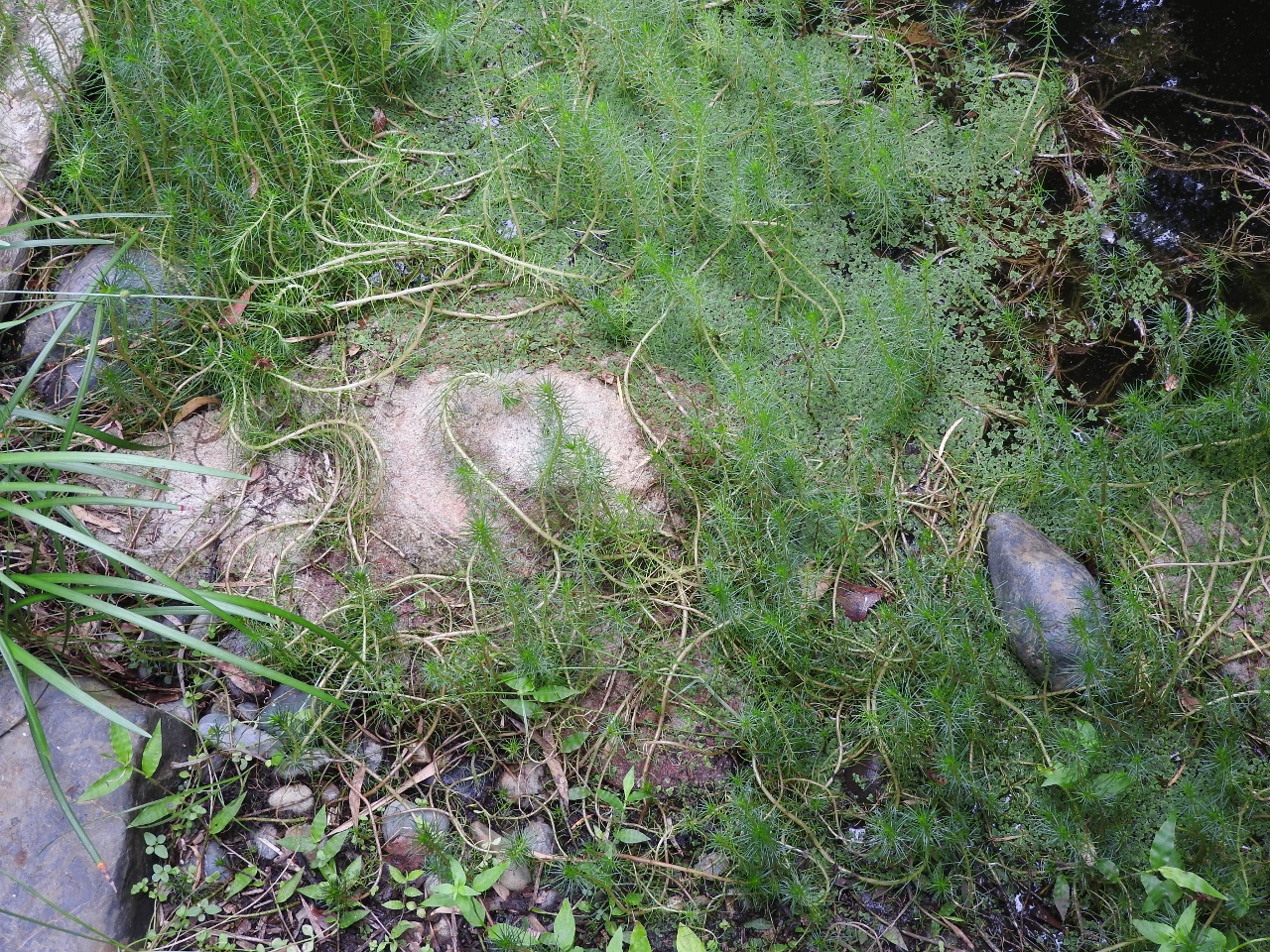
This is what the edge of my pond usually looks like, all frog and insect friendly …

Frog Friendly

And this is what it looks like at the moment, a sloshy muddy mess, with the liner exposed.  Not an attractive sight.

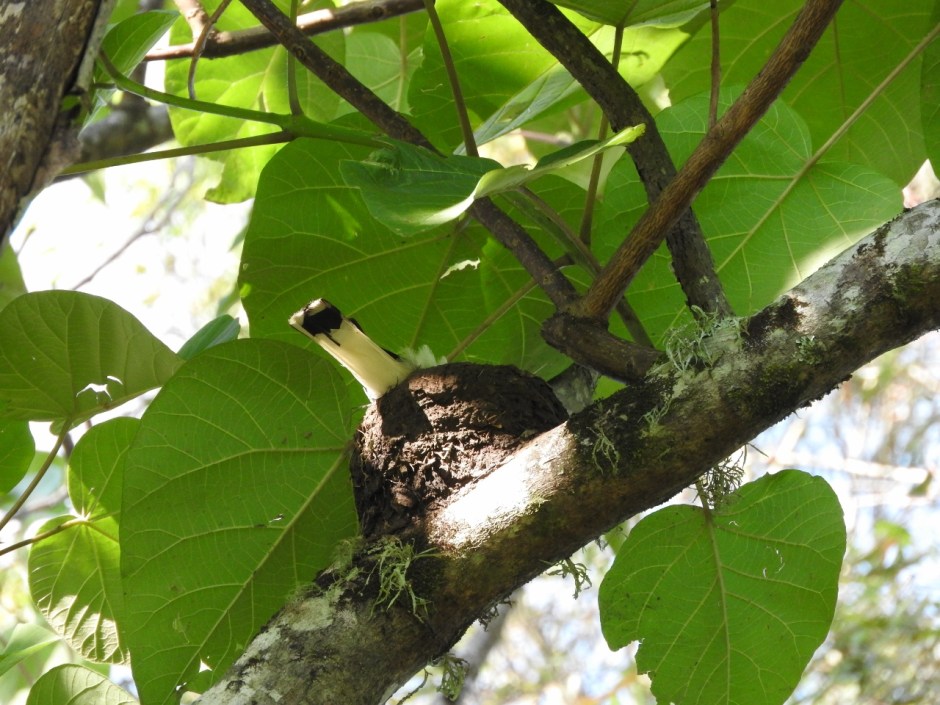
And the cause? A pair of black and white birds usually called Magpie-larks or Pee Wees. These birds are also less commonly known as Mudlarks and guess what?  It’s Mudlark nesting season.

Unsurprisingly, they build their nests from grass and plant material stuck together with wet mud, and it only took me fifteen minutes of following their calls and tree checking to find the nest.

There was MY pond mud, on a branch fifteen metres up in a Paulownia tree!

No larking matter
Mudlark in the Paulownia tree


Mudlarks are diligent parents and quite territorial, with both taking turns to incubate the eggs and to keep a lookout for interlopers.  Towards the end of this video, you’ll hear the alarm being sounded by the on-duty parent.


Now I’m quite fond of wildlife, but this means that I’m going to have to crawl along the edge of the frog pond and reconstruct it, which peeves me more than a bit.  Even though in the process of searching for the Mudlarks,  I found the new roosting spot of the Tawny Frogmouth couple who used to live under a banana leaf nearer the house.

We’re still here!